Crypto Payment Gateway Fees vs Blockchain Transaction Fees
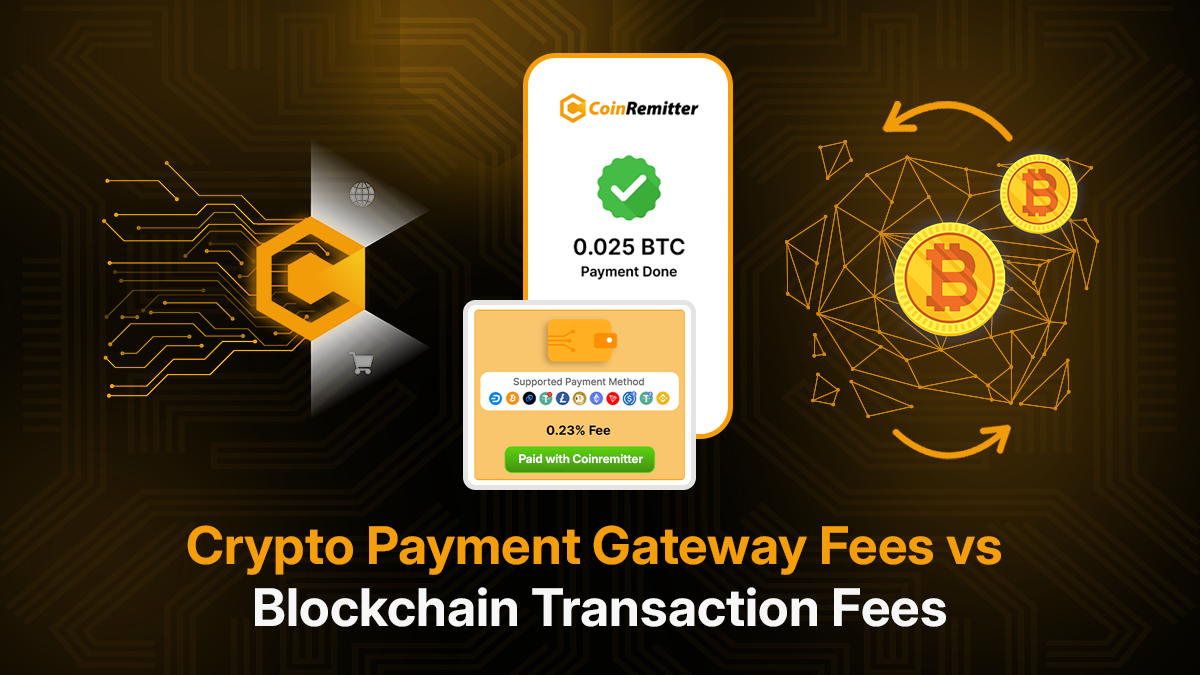
Every crypto payment your business processes carries two fees, and most merchants can’t tell them apart. That gap in understanding costs real money. A 2026 survey from PayPal and the National Cryptocurrency Association found roughly 39% of US merchants now accept crypto payments at checkout. Every one of them pays both charges on every sale, whether they realize it or not.
The two costs couldn’t be more different. Your crypto payment gateway charges a flat fee for handling the checkout, confirming the payment, and protecting you from errors. The blockchain network charges a separate transaction fee for miners and validators who actually move the coins. Together they make up your real cost of accepting crypto. They just behave nothing alike.
Blockchain Transaction Fees: The Unpredictable One
Blockchain transaction fees go to the network. They reward people who secure the network and confirm transfers. Their job is simple: keep spammers out and honest transactions flowing. Demand for block space changes by the hour. These fees are volatile.
Look at Bitcoin. Average Bitcoin transaction fees hovered around $0.20 to $0.40 per transfer in 2026, per BitInfoCharts and yCharts. Congested periods? They’ve spiked past $50. Ethereum’s ERC-20 transfers follow the same pattern on a bigger scale. A USDT or USDC transfer costs a dollar or two in normal conditions. Gas fees were quite high during the NFT bloom. 2026 prices are friendlier. But still, they move.
That unpredictability is the real reason network fees never get quoted like a rate card. There’s no price list for congestion. You pay whatever the mempool demands at the moment you transact.
Crypto Payment Gateway Fees: The Predictable One
Gateway fees are what the processor charges for letting you accept payment in crypto. They’re quoted as a percentage, and compared to network fees, they’re rock solid. Coinremitter charges 0.23% crypto processing fees. That’s it. Other cryptocurrency payment gateways charge 0.5% to 1%.
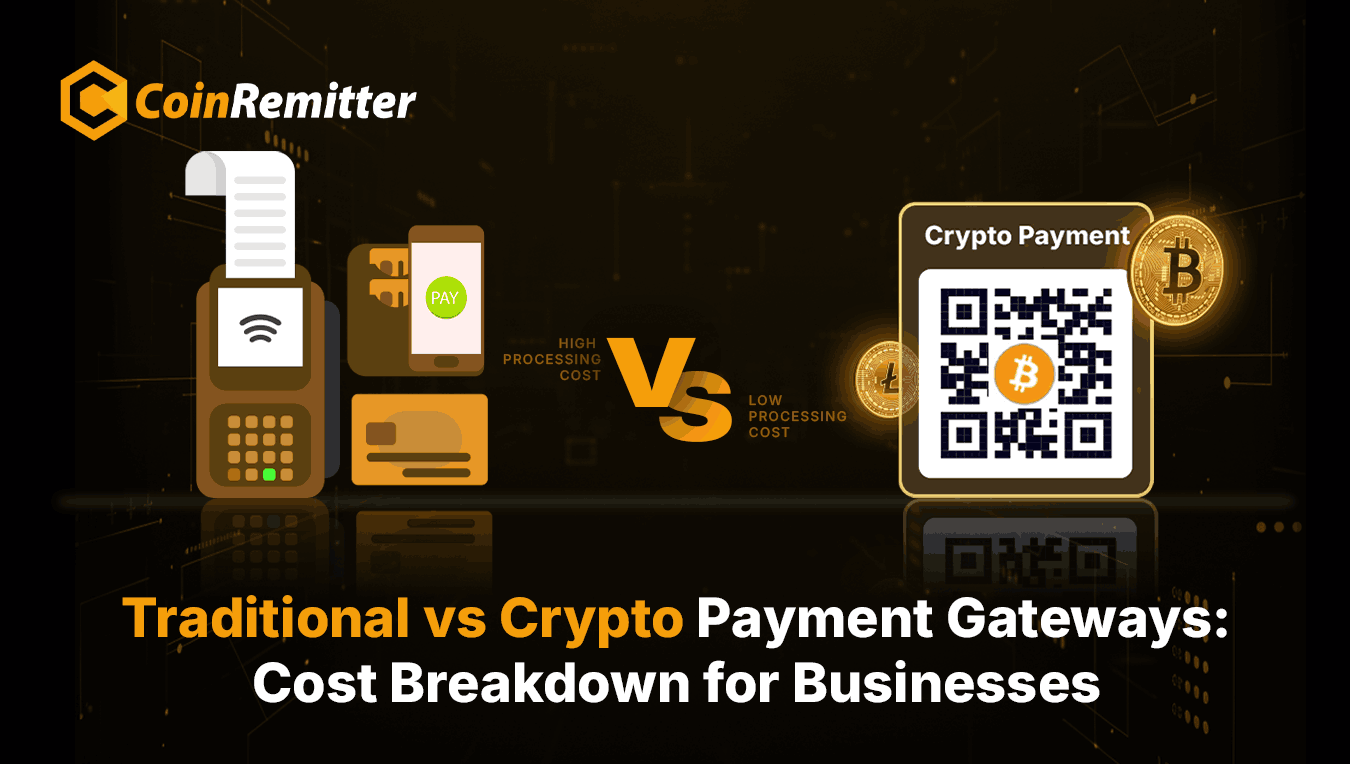
The spread matters more as volume climbs. On $100,000 in monthly sales, 0.23% costs you $230. A 1% gateway costs you $1,000. Run the year, and that’s $13,760 you’d never see. Traditional cards, for reference, still eat 2.9% plus $0.30. $2,900+ on the same monthly volume.
How the Two Fees Stack Into One Real Cost
Here’s where it gets confusing. The network fee isn’t always yours. When a customer pays through your checkout, the gateway typically absorbs the inbound network fee. You pay the gateway fee at withdrawal, when funds move from your gateway wallet to one you control.
Follow a real $1,000 sale through Coinremitter: you pay $2.30 when you withdraw. Move those coins to a Bitcoin address, and you’ll also cover whatever the BTC network asks at that moment. Usually a few dimes or sometimes much more. Either way, you’re still way ahead of the $29.30 credit cards take on the same sale. That’s the whole point of separating the two fees.
One stays flat while the other moves, which means a single number on your statement never tells the full cost story. Budget for the fixed part and leave room for the moving one.
Keeping Both Fees Low
You can’t control the network. You can control which network you use. Tron USDT transfers run a few dollars; Ethereum mainnet costs several times that at peak hours. Coinremitter’s fee chart lists exact network costs for every supported cryptocurrency upfront. No digging through block explorers required.
For heavy stablecoin volume, the Gas Station covers part of your gas fees automatically. Fees are deposited in advance. They are deducted during the incoming payment. This feature lets you save up to 60%. It’s a Pro-plan perk at roughly $99/month. For merchants moving frequent transfers, it often pays for itself within a week.
In practice, a small swing on which coin you settle in can save more than any gateway fee negotiation ever will.
Final Thoughts
Gateway fees and blockchain transaction fees are two separate costs riding on every crypto payment. You don’t need to become a blockchain expert to budget for either. Just a provider that prices one flat and shows the other openly.
Coinremitter does exactly that: a 0.23% crypto payment gateway fee with every network cost listed on the fee chart. Create your free Coinremitter account to accept crypto payments for your business.
Recent News
Over 38,000 merchants are using CoinRemitter
Join them now