Compare Crypto Payment Gateway Fees for Small Businesses
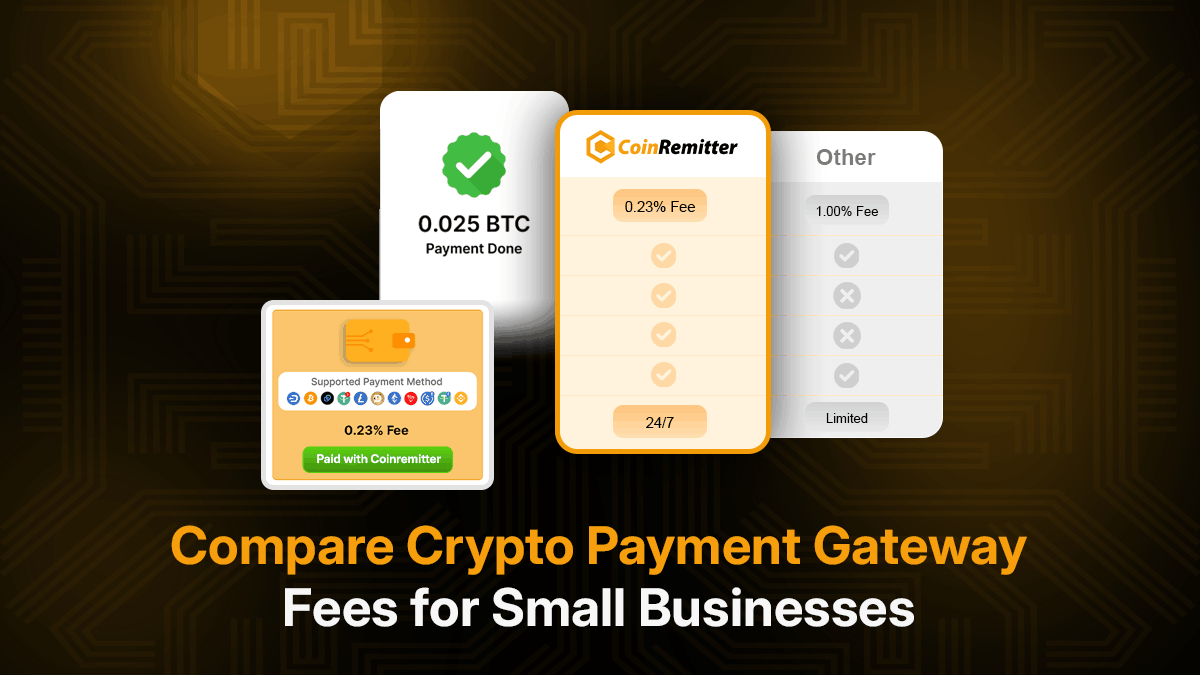
Your payment processor costs more than you think. All-in card processing for a small US business runs 2.5% to 3.5% per transaction. It can push toward 4% once statement and chargeback fees pile on, according to ClearlyPayments’ 2025 data. That’s $2.50 to $4 on every sale of $100.
Small merchants feel it worst. They can’t negotiate with a lower volume. Every point of processing cost lands straight on thin margins. More online stores are answering with crypto payments, where the same transaction can cost a fraction of a percent. But the headline rate is only the start when you compare crypto payment gateway fees.
Know Your Real Card Cost First
Most business owners quote their processor’s rate like it’s final. It isn’t. The famous “2.9% + $0.30” assumes a standard domestic card. Reward cards carry higher interchange. International orders trigger cross-border surcharges. Stripe alone adds 1.5% for non-domestic cards, and Shopify tacks on another 1.5% for currency conversion on global orders.
Even Square’s online rate runs 3.3%. Add the fixed $0.30 and a $25 sale becomes nearly 4.5% before you’ve spent a cent on doing business. Every gateway comparison starts from this baseline.
A 2026 Snapshot of Crypto Gateway Fees
These are the headline crypto payment gateway fees as of mid-2026, small-business tier, settling in crypto. Network costs ride on top everywhere when you accept payment in crypto, not just with one provider.
| Gateway | Headline fee | What pushes the real cost up |
| CoinRemitter | 0.23% | Network fees only |
| NOWPayments | 1% | 1% once you convert coins |
| CoinGate | 1% | €0.50 + 0.5% payout fee |
| BitPay | 1-2% | $0.25 fixed; 1% needs $1M/month volume |
| Cryptomus | 0.4-2% | New accounts actually start at 2% |
| Coinbase Commerce | 1% | Wound down for most merchants since March 2026 |
[Note: All charges are as of 9 Oct 2026. Variations may occur in the future, depending on the respective platform authorities.]
We can say that tiered pricing quietly punishes small operators. BitPay’s best rate unlocks above a million in monthly volume. Most small businesses don’t see that number. Cryptomus advertises “from 0.4%” while charging new signups 2%. The rate on the pricing page and the rate you pay are different animals.
And fixed fees bite hardest on small baskets. A $0.25 fixed charge on a $12 sale is 2% on its own. The lower your order value, the uglier it gets.
Run the Math on Your Own Volume
You should compare dollars on your actual numbers instead of percentages when you accept crypto payments.
Say you process $40,000 a month and pay an effective 3% across cards:
Card fees: $1,200
Crypto gateway fees at 0.23%: $92
Difference: $1,108 per month
That’s roughly $13,000 a year anyhow. That kind of gap funds some operations for a small business.
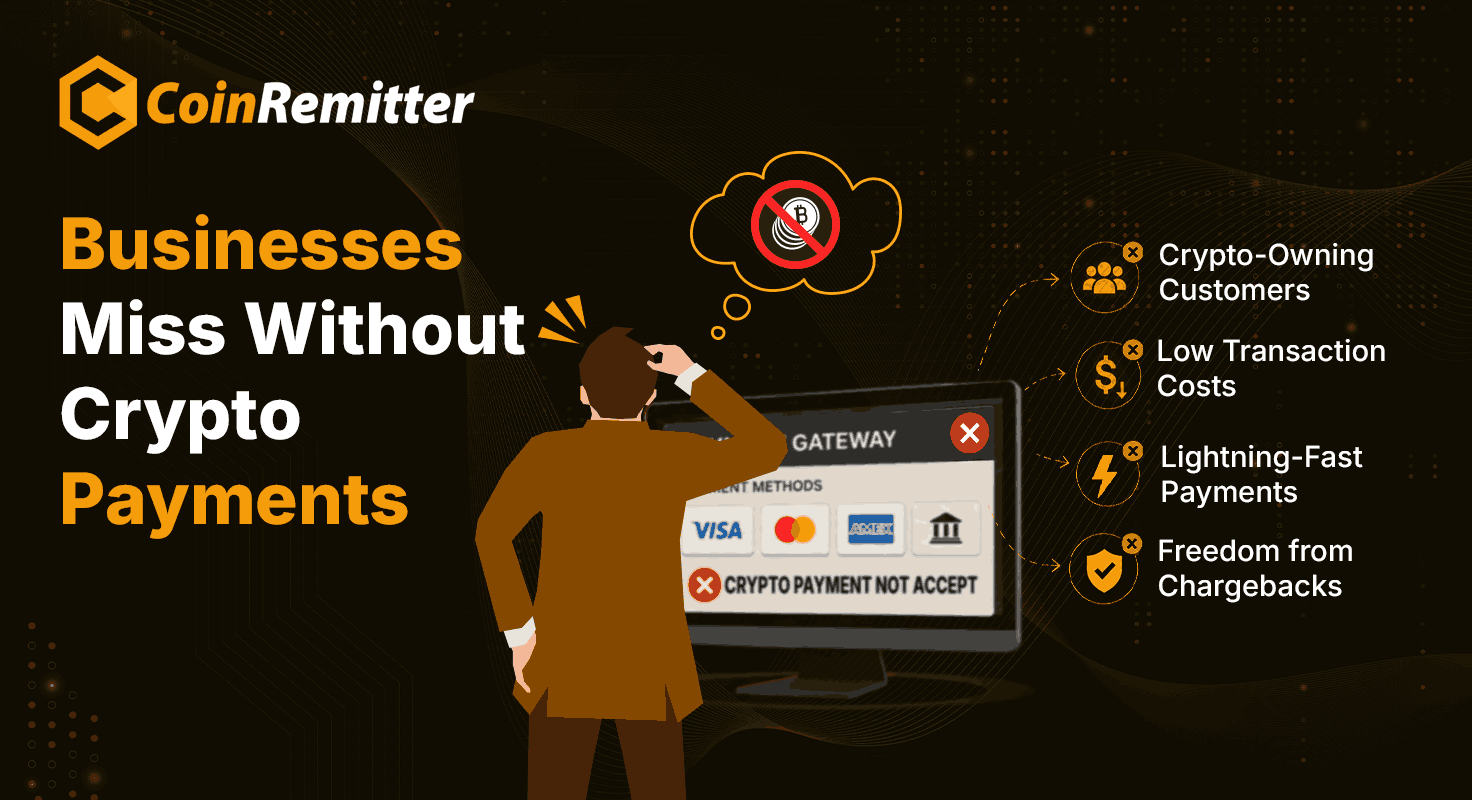
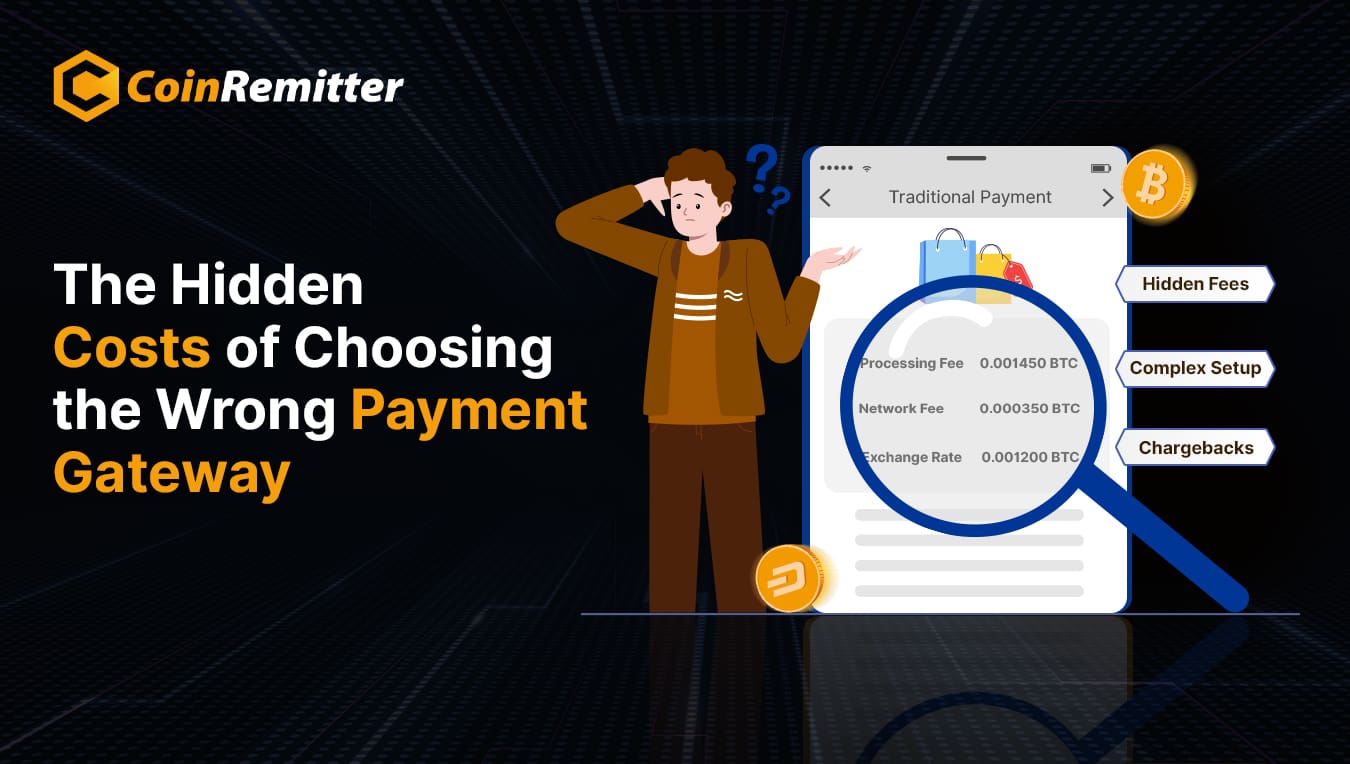
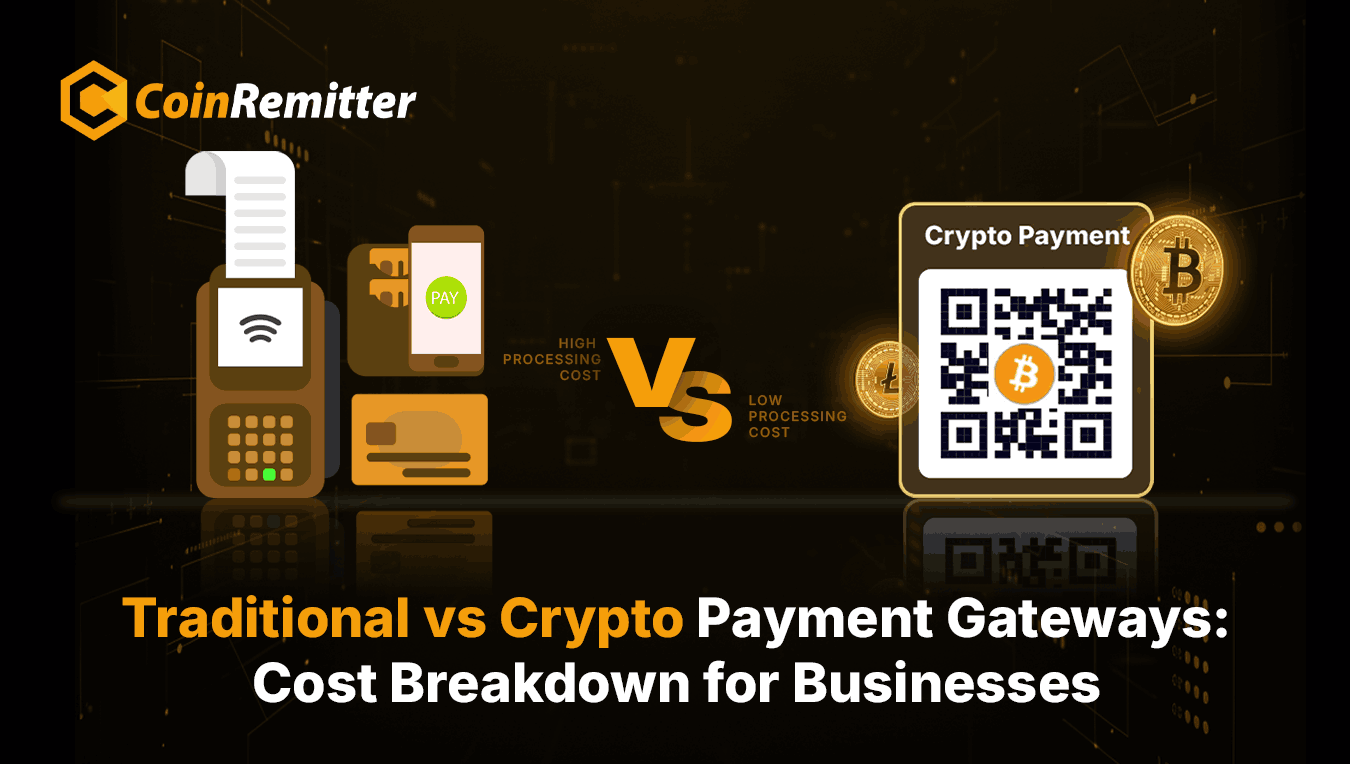
The math gets better the more global you are. Every 1.5% conversion surcharge disappears when customers pay in crypto directly. There’s no chargeback line to fund either. Settled blockchain payments can’t be reversed, while card-not-present merchants carry dispute rates near 0.65%, each one costing about $128 all-in per Mastercard’s 2025 estimate. This breakdown of traditional payment costs runs through those numbers in detail.
The Costs No Spreadsheet Shows
Fee tables are the easy part. And the least useful.
- Onboarding. KYC requirements add days before you can collect a single payment. Some gateways want documents; others ask for nothing.
- Freeze risk. A compliance review can lock funds mid-campaign. That revenue stays unreachable until the paperwork clears.
- Settlement timing. Crypto lands in 10-30 minutes. Cards take 3-5 business days.
- Stablecoin overhead. Settling USDT or USDC on Ethereum can run several dollars in gas per transfer. CoinRemitter’s Gas Station trims those by up to 60%.
What You Get for 0.23%
Everything below sits on top of the same flat rate.
- No KYC, no waiting. About 3 minutes to set up an account without documents and verification delays.
- Zero chargebacks. Confirmed blockchain payments are final. The dispute line simply vanishes.
- 11 coins across Free and Pro. BTC, LTC, DOGE, BCH, DASH, BNB, and USDC on Free, plus USDT, ETH, and TRX on Pro. See the full supported coin list.
- Test before launch. Ten free Test Coins let you verify the integration risk-free, then install a plugin or use the Crypto API docs.
Complete pricing, everything spelled out, lives on the fees page.
The Bottom Line
Headline rates are marketing. Effective rates are arithmetic.
When you compare crypto payment gateway fees on the full stack. Percentage, fixed charges, network costs, and off-ramp. The ranking shifts fast, especially for small merchants. Few platforms sit at the bottom of it. CoinRemitter does: a flat 0.23%, no fixed fee, no volume tiers, no KYC.
Create your free account in 3 minutes and run the numbers against your own last three statements. The math won’t take long.
FAQs
How are cryptocurrency payment gateway fees calculated?
These platforms usually calculate fees as a percentage of each transaction. Some providers also add fixed fees for other operations.
What is the average crypto payment gateway fee?
The average crypto payment gateway fee ranges from 0.5% to 1%. The fees depend on the service provider. We charge only 0.23%, which is the lowest processing fee.
Do crypto payment gateways charge network fees?
Most crypto gateways pass network fees to customers or merchants. The fee amount depends on the network and the transaction type.
Are crypto payment gateway fees lower than card processing fees?
They can be. Crypto gateways may charge less than traditional payment service providers.
Can small businesses save money by accepting crypto payments?
Yes. Lower crypto transaction fees can reduce payment processing costs. That’s why small businesses should accept crypto payments to save money.
Recent News
Over 38,000 merchants are using CoinRemitter
Join them now