How to Accept Crypto Payments Without Building an API
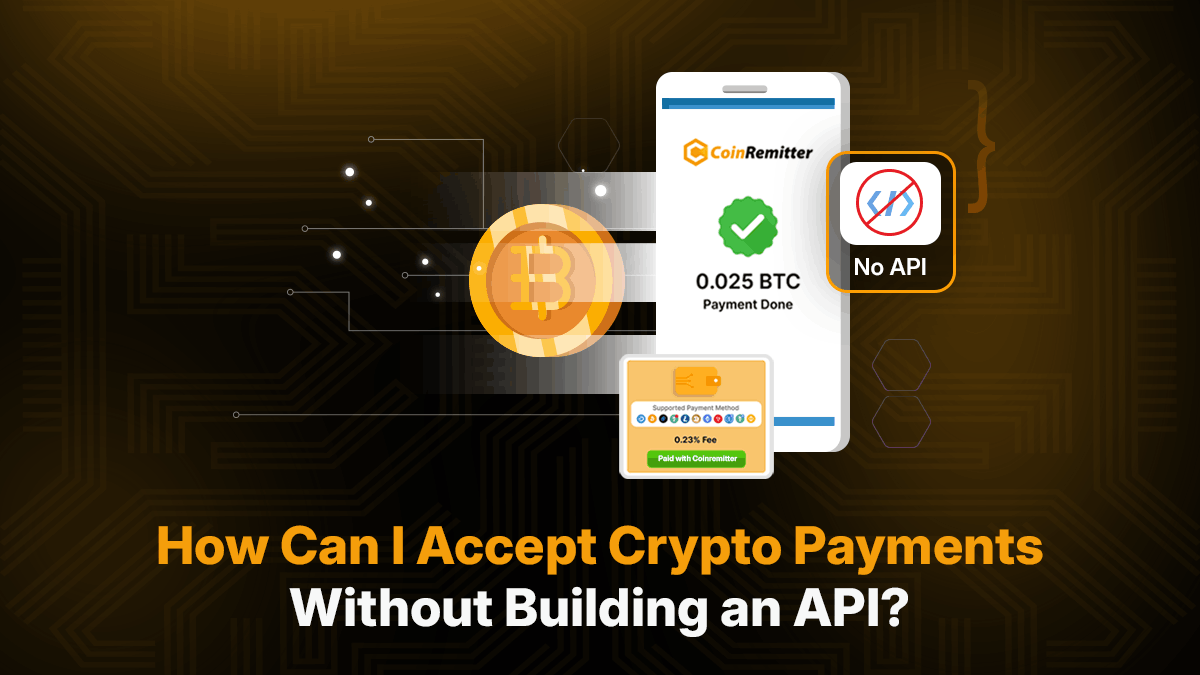
Ninety percent of U.S. merchants would accept payment in crypto if the setup felt as easy as switching on credit cards. The demand to accept crypto payments is already there. So is the willingness. What’s missing is the plumbing. That’s exactly where most projects stall.
Building a custom payment integration looks simple in a quickstart guide. It’s a different story in production. Pharos Production, a fintech consultancy, puts a third-party gateway integration at $8,000 to $30,000 over two to six weeks. Other estimates run 80 to 200 developer hours before the first transaction clears. Nobody signs up for that. Most just go back to credit cards.
All of that work belongs to the crypto payment gateway. And you can skip it entirely.
Why Custom Payment API Builds Keep Slipping
Ask a business owner why they haven’t started to accept crypto payments and you’ll hear some version of “we don’t have a developer.” Dig deeper and the real reason surfaces: even with a developer, payment infrastructure is an odd thing to spend engineering hours on. Checkout touches revenue. Nobody wants to break it while experimenting.
The work runs deeper than the docs suggest. Beyond the initial call, you’re handling authentication, webhook retries, expired invoices, refunds, and currency edge cases. Then APIs get versioned upgrades. Your integration breaks in ways that need regression testing. Maintenance that never really ends.
A January 2026 survey found 39% of merchants already accept payment in crypto at checkout. That figure jumps to 50% among large enterprises. But 90% said they’d try it if setup were as simple as accepting a credit card. The demand isn’t the bottleneck. The friction is. Which is a fixable problem, and not one that needs a developer.
Payment Buttons and Standalone Pages With Zero Coding
Start with what most businesses actually need: a way to take a payment right now. Not a platform migration. Not a checkout rebuild. One link or one button.
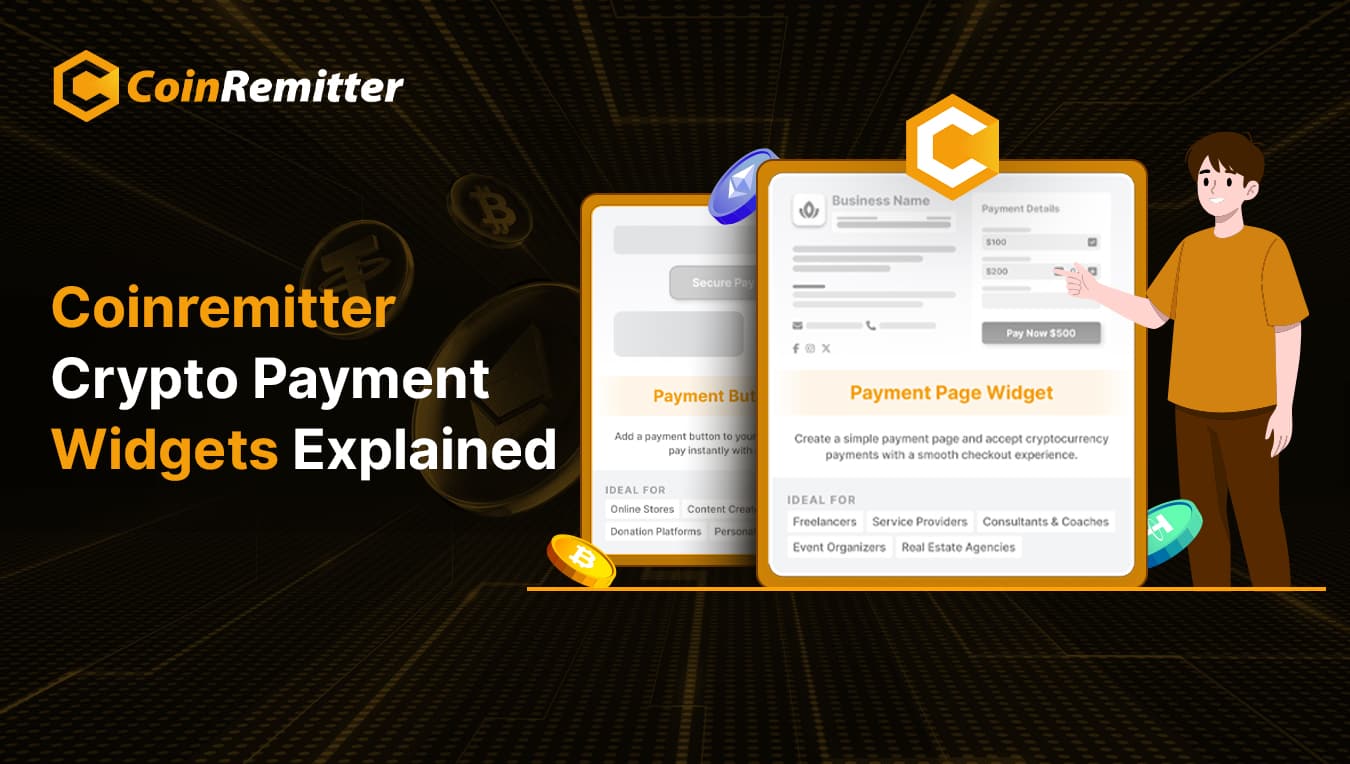
The Payment Button Widget does that. Pick a style, link the wallets you want, type in the price, and copy the generated snippet into your page. Adjustments come later. Button color, label, size, and border come from a settings panel, not a stylesheet. You never open a codebase.
If you don’t have a website at all, that’s not a blocker. The Payment Page Widget builds a standalone checkout with its own shareable URL. Fixed amounts for products, customer-decided amounts for donations, and item-with-quantity for orders where someone buys two of the same thing. Up to ten price fields on one page, plus goal trackers, social sharing, and automatic email receipts.
Text it to a client. Drop the link in your Instagram bio. Print it as a QR code on a flyer.
Crypto Payment Plugins for the Platforms You Already Run
If you do run a store, a plugin beats a from-scratch build every time. Nobody sane rebuilds a working WooCommerce or Magento store to change a payment method. Coinremitter crypto payment plugins cover these platforms along with some others.
Download, install, enter your wallet credentials, and crypto shows up as a checkout option. Most store owners finish in about 12 minutes. The code is open-source too. You can inspect and adjust.
The plugins sit on top of the crypto API documentation rather than replacing it, which matters later. For a standard store, you’re not writing the integration. Someone already did.
Pricing and Presale Widgets for Specific Models
Some businesses don’t sell one thing at one price. Subscription plans, donation tiers, token presales. A generic payment button fits none of them well.
For tiered pricing, the Pricing Widget displays multiple plans side by side with live preview, custom CSS, and per-plan deliverables. Customers compare and pay in one step. SaaS companies and membership sites use this more than anyone expects.
Crypto projects get their own tool. The Presale Widget handles up to four distribution rounds, adjustable pricing to create urgency, and per-round analytics. No smart contract deployment, no custom frontend.
When You Should Still Write API Code
Being straight with you: no-code isn’t universal. Run a marketplace where payments split between sellers? A custom platform with unusual billing logic? Need programmatic control over reconciliation? Then a crypto API integration is the right call. The documentation covers it.
But if your goal is to accept crypto payments this quarter, custom development is the slowest path to revenue. Use the tools until you outgrow them.
One thing worth knowing before you go live: you can test the whole flow with free Test Coins. Create a test wallet, get 10 TCN credited automatically, and run through real payment scenarios without risking actual funds. Learn more in the Test Coin guide.
Why Choose Coinremitter for Cryptocurrency Payments?
- No KYC, 3-minute signup: No identity documents, no waiting on approvals. Create the account and start building.
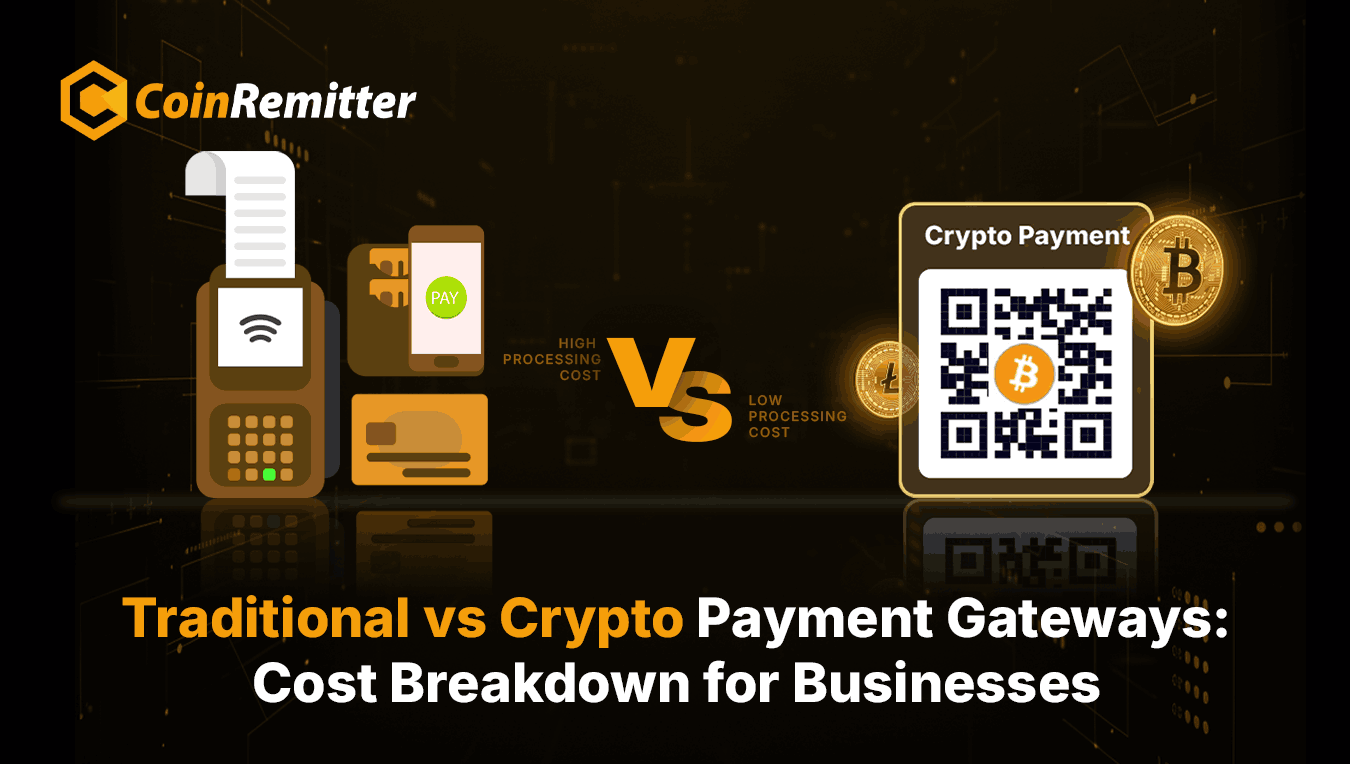
- 0.23% per transaction, both plans: That’s $2.30 on a $1,000 sale. Credit cards charge $29.30 for the same amount.
- 11 cryptocurrencies on Pro, 7 on Free: Customers pay in whatever they already hold. Bitcoin, Litecoin, Dogecoin, and Dash on the free tier, with USDT, ETH, and TRX added on the paid one.
- 130+ countries, no currency conversion: Anyone, anywhere. No conversion fees quietly eating the difference.
- Funds in 30 minutes: No 3- to 5-business-day settlement window. No chargeback risk either. Blockchain transactions are final.
Conclusion
Wiring up a crypto payment gateway through custom development is a multi-week project that eats engineering time better spent on your product. The whole job reduces to copying one embed code or sharing one link for most businesses.
Over 30,000 businesses already run payments through Coinremitter this way. Ready to see how it works? Create a free account without KYC, build a payment page in minutes, and test it with free Test Coins before your first real payment.
FAQs
Why is crypto payment integration important?
Crypto payment integration is important because it lets buyers pay without leaving the website. You can automate the payment process and make the checkout process smoother and more effortless.
Is there any fee for using Coinremitter’s integration solutions?
No. Our crypto payment integration features are completely free as of now. You don’t have to pay anything to integrate cryptocurrency payments into your platform.
Can I use the crypto API as an alternative to plugins?
Yes. You can use the API as an alternative to plugins if you want more flexibility. Having web development skills or a developer team is recommended.
What platforms do Coinremitter plugins support?
Coinremitter crypto payment plugins support the following platforms:
- Magento
- WordPress
- PrestaShop
- OpenCart
- Laravel
- Node.js
- PHP
Can I accept crypto payments without a website?
Yes. You can accept payment in crypto without a website. Our Payment Page provides a live URL where you can redirect buyers to request payments.
Recent News
Over 38,000 merchants are using CoinRemitter
Join them now