How to Accept USDT TRC20 Payments with an API
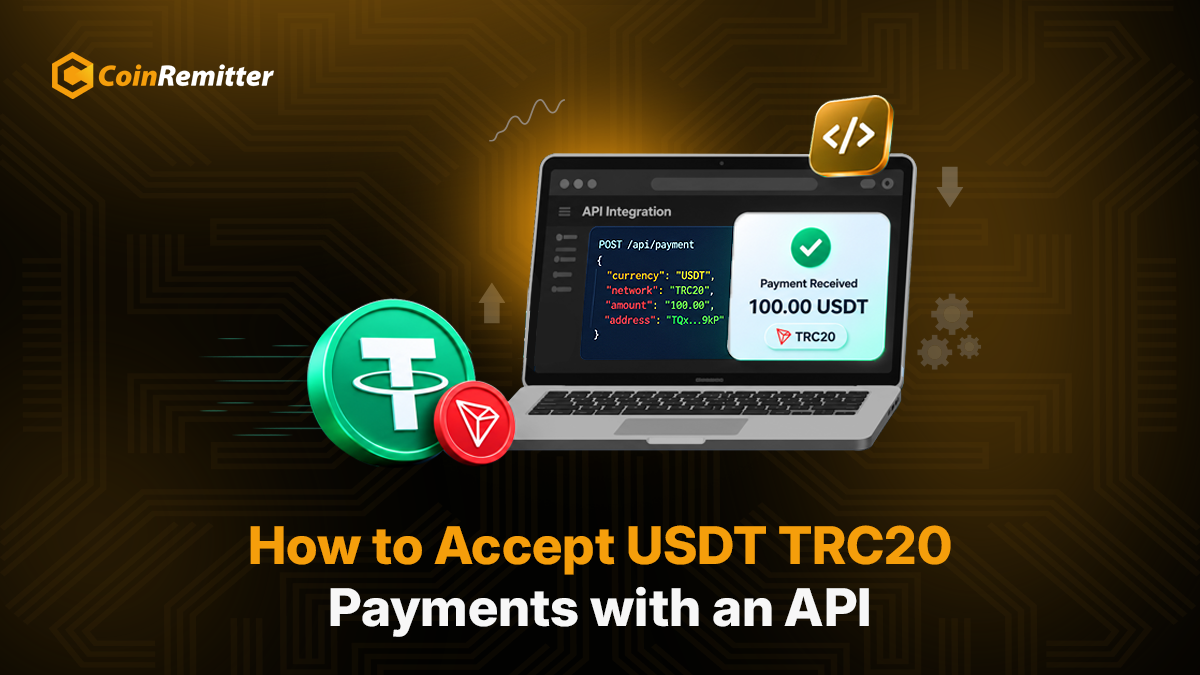
TRON settled $2.21 trillion in stablecoin volume in Q3 2026, according to TRON DAO’s State of TRON report. CoinDesk Research puts that at roughly 73% of every stablecoin dollar moved on any chain. More than half of all USDT transfers under $1,000 now run on Tron too.
The gap sits on your side of the screen. Flagship Advisory Partners checked the websites of the top-50 U.S. merchants in 2026 and found just 4% accept stablecoins at checkout. Even though 90% of merchants say they’d take crypto if setup matched the simplicity of a credit card. A USDT TRC20 API closes that gap quickly. You just need a reliable USDT TRC20 payment gateway.
Why the TRC20 Network Changes What a Payment Costs
USDT is a token issued by Tether. It exists on several chains at the same time. Where your customer sends it decides two things you pay for:
- Network fee
- Transaction speed
Blocks land every three seconds on Tron. The transaction solidifies after 19 of them (roughly 57 seconds). Reversal stops being realistic. Ethereum needs about 13 minutes to reach protocol finality. Its gas price floats. A USDT transfer cost $0.014 on a quiet August 2026 morning and can run past $15 when the network gets busy.
The TRC20 side is steadier. A transfer burns roughly $2.13 to $4.50 in TRX for a USDT TRC20 transaction. Staked or rented energy pushes that under $1.
Volume follows the cheap rail. CoinDesk Research keeps USDT on Tron at an all-time high of $92.7 billion in Q3 2026. TRON now carries just over half of all Tether in circulation.
What the API Takes Off Your Plate
Build this by yourself. You end up maintaining a monitoring service against an active chain. You’d need to do the following:
- Generate a unique payment address for every order
- Check for incoming payments
- Track transaction confirmations
- Notify your server when a payment arrives
- Match each payment with the correct order
Any of these steps can fail at any time.
The USDT TRC20 API reduces the risk of failure. You send the request. It brings back exactly what you asked for. This is how it lets you accept USDT TRC20 payments.
Your request carries three fields. Coin, amount, order ID. Back lets the customer pay with the necessary payment details. It waits for the confirmation threshold and calls a webhook you own. Your handler marks the order paid.
That’s the whole contract. This crypto payment gateway’s API documentation lists every endpoint. The webhook payloads and sample calls you can paste straight into a backend.
Steps to Accept USDT TRC20 Payments
Five steps. The order matters less than you’d think.
- Create the account. An email address gets you in. No identity documents, no approval queue. Sign up for Coinremitter. Then you’re holding a working API key in about three minutes.
- Pick a plan. USDT TRC20 lives on the Pro plan at roughly $99 a month. This plan also unlocks higher API rate limits and priority support. Coins with the free plan instead. The supported currencies list shows the full split.
- Create the TRC20 wallet. The dashboard lets you create a USDT TRC20 wallet. Tron addresses start with a T and are 34 characters long. So treat that string carefully. One mistyped character and the deposit is gone.
- Call the address endpoint. Your backend posts the amount and coin. It handles the entire payment process.
- Register the webhook URL. Every order needs a callback that settles it. Get the payload shape right, or you’ll settle orders nobody paid for.
Running WooCommerce or any other widely-known platform? A crypto payment plugin does the same job. No manual coding needed.
Test the Flow Before Real Money Moves
Live transactions are a bad place to learn that your callback fires on the wrong event. A misconfigured handler marks unpaid orders as paid, and then you’re reconciling live transactions by hand.
This USDT TRC20 payment gateway hands every account ten Test Coins. They travel the same endpoints as USDT TRC20 payments. So your handler gets exercised without a dollar of exposure. Staging and development can run at the same time.
Once the callback fires correctly in a test, you swap in the live wallet credentials. Nothing in your checkout code changes. The Test Coin guide walks through the dry run.
Two Fee Lines Land on the Same Invoice
The gateway takes 0.23%. The network takes $2 to $4.50. Both hit the same USDT TRC20 payment. But only one of them shows up on your statement.
Payouts carry a second line. The Gas Station cuts USDT TRC20 withdrawal gas from 5 USDT to 2 USDT on Pro. It is 60% less on every payout.
Settlement takes 30 minutes instead of 3 to 5 business days. And no chargebacks. Once a blockchain transfer confirms, nobody files a dispute against it.
Why Coinremitter
- No KYC: An email and a password. No document uploads.
- 0.23% on every plan: Free and Pro charge the same crypto processing fee.
- Ten test tokens on the house: every endpoint proven before real money moves.
- 99.9% uptime, 130+ countries, eight years without a breach: your checkout doesn’t go dark, and there’s no regional surcharge on what you earn.
- Gas Station: Save up to 60% on USDT TRC20 network fees.
Start Accepting USDT TRC20 Payments
This isn’t a six-week engineering project. Keys in three minutes, a test flow before lunch, a live USDT TRC20 payment before the day ends.
The distance between 73% of stablecoin volume moving on Tron and 4% of large merchants accepting stablecoins isn’t technical. It’s a checkout missing a button.
Create your free Coinremitter account and pull the API documentation.
Recent News
Over 38,000 merchants are using CoinRemitter
Join them now