Ethereum Payment Gateway: How to Accept ETH & ERC-20 Payments
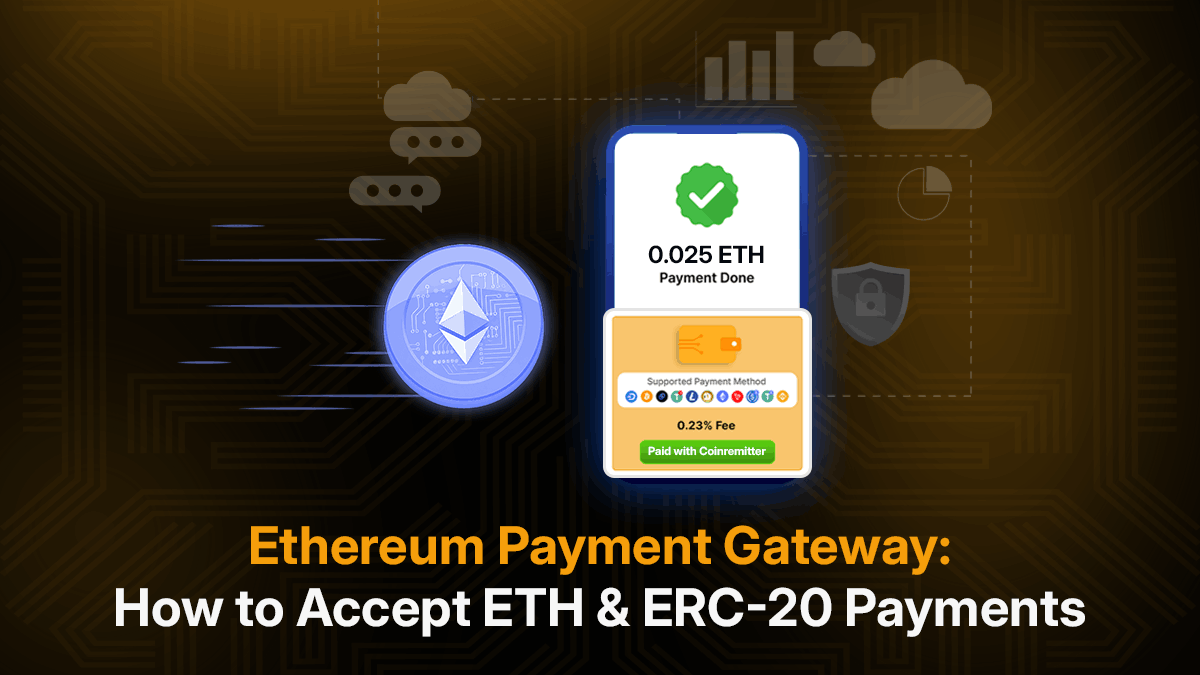
ETH payments have become increasingly popular. The key reason for their popularity is businesses’ approach to Web3. Businesses can now accept cryptocurrency payments instead of relying only on traditional payment methods.
Here, we will go through a complete guide to using an Ethereum payment gateway. We will use Coinremitter as an example. This will explain how Ethereum payments work and how gas fees affect transactions. We will also look at how businesses can add ETH payments to their websites.
Let’s understand the basics of an ETH payment gateway first.
What Is an Ethereum Payment Gateway?
An ETH payment gateway lets businesses accept Ethereum payments.
These services ensure that businesses don’t have to build a payment system from scratch. You can just integrate the service into your platform to accept ETH payments.
The basic payment flow looks like this:
Customer’s Ethereum wallet → Ethereum network → Payment gateway → Merchant wallet/account → Settlement
A payment gateway acts as a medium between the customer and the business.
It can monitor blockchain transactions, verify payments, connect payments with orders, and help merchants manage their received funds.
Why You Should Accept Ethereum Payments
Ethereum is one of the most used blockchain networks. Its ecosystem is also much larger than cryptocurrency payments alone.
Many businesses or other blockchain-based services can benefit from accepting Ethereum payments.
Smart Contracts
Ethereum/ETH is quite popular for its smart contracts. Applications and businesses can create blockchain-based services using them. They don’t have to rely entirely on traditional infrastructure.
This makes Ethereum a natural payment option for businesses already operating in the Web3 ecosystem.
Large ETH Holder Base
Ethereum has a large global user and holder base. Supporting ETH gives these users another way to pay for products and services.
It can also be useful for international customers because Ethereum payments do not depend on traditional banking networks.
Web3, Gaming, and NFT Businesses
Ethereum is widely used across Web3 applications. It is also popular among NFT marketplaces and blockchain games. Decentralized platforms also use Ethereum extensively.
Businesses in these industries can accept ETH directly from customers who already use Ethereum wallets.
This creates a more natural payment experience than asking crypto users to convert their assets into traditional currencies first.
No Traditional Chargebacks
Crypto payments work differently from card payments.
Once an Ethereum transaction is confirmed, it generally cannot be reversed through a traditional chargeback process. This protects businesses from the chargeback disputes commonly associated with card payments.
However, businesses need to verify payments carefully because blockchain transactions are generally irreversible.
How an Ethereum Payment Processor Works
An Ethereum payment processor handles the connection between a customer’s ETH payment and the merchant’s order.
The actual process is quite simple.
Customer Proceeds With Payment
A customer visits the payment page. Then he chooses the Ethereum payment option.
The payment page displays the required amount. It also shows the Ethereum payment address or payment information.
The customer then sends ETH from their wallet.
Blockchain Confirmation
The transaction is broadcast to the ETH network.
Validators process the transaction and include it in the blockchain. The payment gateway monitors the network. Then it checks whether it has received the required amount.
The payment can be marked as successful after the transaction reaches the required confirmation level.
Settlement
After receiving and confirming the payment, the funds can be settled according to the merchant’s setup.
For example, the merchant may withdraw the funds to an external Ethereum wallet.
Transaction Speed & Costs
Ethereum produces blocks much more frequently. That’s why Ethereum transactions can be confirmed relatively quickly compared to Bitcoin.
However, the actual time required can vary depending on network conditions and the confirmation requirements of the payment gateway.
Transaction costs also work differently from traditional payment processing.
Ethereum uses gas fees to process transactions. The fee can change depending on network activity.
This means the cost of an Ethereum transaction is not always fixed.
Ethereum Gas Fees & How They Affect Businesses
Gas fees are paid to the Ethereum network during payment processing. It is the cost required to perform an operation on the network.
Gas fees can increase when the network is busy. Fees can decrease when network activity is lower.
This is important for merchants because receiving and withdrawing cryptocurrency can involve separate blockchain transactions.
For example, a customer may pay ETH to a merchant address. Later, the merchant may transfer those funds to another wallet. The second transaction can also require a network fee.
How Coinremitter Helps Manage Gas Fee Volatility
Gas fees are determined by the Ethereum network. So, no payment gateway can completely remove them.
However, a payment gateway can simplify the process of receiving, monitoring, and settling payments.
Also, ETH fees are flat and transparent here. The gas fee you are going to pay is mentioned in advance in the fee chart.
The Gas Station also helps you save 40% on ETH gas fees. You have to deposit the fee in the GS wallet in advance to use these benefits.
Note: Network fees and gateway fees are subject to change depending on network conditions and the provider’s current pricing.
How to Set Up an Ethereum Payment Gateway On Your Profile
Adding ETH payments to your website isn’t complicated these days. A payment gateway can provide the infrastructure needed to start accepting ETH.
Here is the basic setup process:
- Sign Up/Login: Create your Coinremitter account and log in to your dashboard.
- ETH Wallet: Create an Ethereum wallet from your Coinremitter dashboard. Enter an external wallet address for settlements and configure the required details.
- Integrate Ethereum Payments into Your Platform: Use Coinremitter’s solutions to add Ethereum payments to your website.
- Plugins: Crypto payment plugins are available for supported platforms and require a simple installation process.
- API: A crypto API can be used when you need a customized integration or your platform isn’t compatible with a plugin.
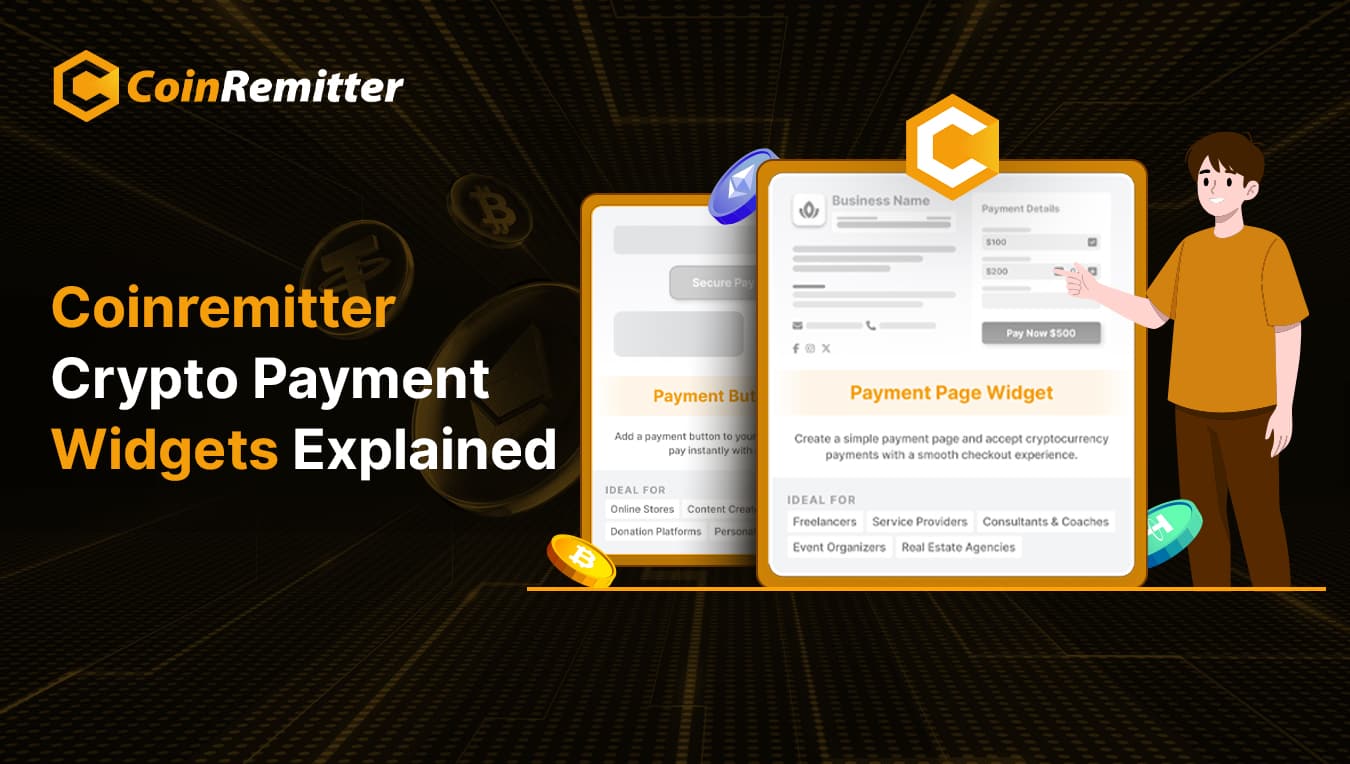
- Widgets: Payment widgets provide another way to add crypto payment functionality without developing the complete payment interface yourself.
After successful integration, customers can select Ethereum at checkout and complete their payment through their crypto wallet.
Note: Invoices and the Payment Page can also be useful for businesses that don’t have a full e-commerce platform. These options provide a more structured payment experience than simply sharing a wallet address.
Security Considerations for ETH Payment Processing
ETH transactions are generally irreversible. So, security is quite important when accepting Ethereum payments.
Any mistake in the wallet address or payment amount can cause a permanent loss of funds. The same can happen if there is an error with the transaction.
The Ethereum payment gateway you choose should provide appropriate security features for wallet management, payment monitoring, and account access.
You should also follow some basic security practices:
- Verify transactions: Don’t mark an order as paid simply because a transaction has been initiated. Confirm that the transaction has been processed according to your gateway’s requirements.
- Check the network: Make sure buyers use the correct network when paying.
- Protect Wallet credentials: Keep API keys and other sensitive credentials secure. They must be kept away from publicly accessible code.
- Secure wallet access: Use strong authentication. Control access to wallets and withdrawals carefully.
- Maintain payment records: Keep TXIDs and order information for all transactions.
FAQs
What is the difference between ETH and ERC-20?
ETH is a cryptocurrency. ERC-20 tokens are separate digital assets on the same network. They use the ERC-20 token standard. USDT and USDC are the most common examples of this token.
How much time does an ETH transaction take?
An Ethereum transaction takes a few minutes to confirm. The standard block time is ~12 seconds, and the standard confirmation time is around 3-7 minutes.
Are ETH transaction fees higher than Bitcoin?
No. ETH transactions are comparatively affordable. So, ETH transaction fees are lower than Bitcoin fees.
Can I accept both ETH and USDT together?
Yes. You can integrate both into the same checkout. You just have to connect different wallets for both cryptocurrencies.
Can I accept ETH payments without a website?
Yes. Our Payment Page and Invoice let you accept crypto payments without a website.
Recent News
Over 38,000 merchants are using CoinRemitter
Join them now