What Is a Crypto Payment API and How Does It Work?
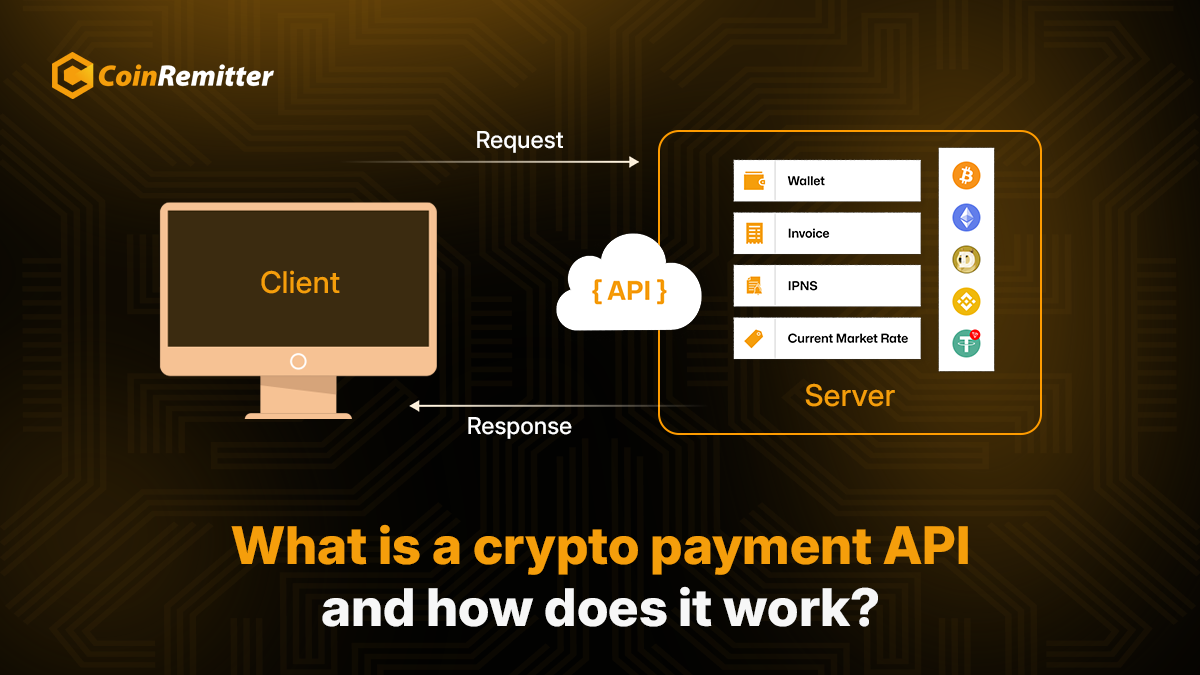
A crypto payment API is the quiet machinery behind every “pay with crypto” button that actually works. Your customer clicks checkout and sees an address or invoice. They send the funds. The order status changes to paid. Nobody refreshes a blockchain explorer. That’s the whole point.
The demand is already there. A January 2026 survey found that 39% of U.S. merchants accept crypto payments. 88% report customers asking about it. What keeps everyone else waiting is integration time. A crypto payment API doesn’t need weeks of custom development. It only needs a few documented calls. The crypto payment gateway sitting behind it handles the blockchain.
What Is a Crypto Payment API?
API helps software communicate with each other. It gives your checkout a short list of commands:
- Create an address
- Generate an invoice
- Check whether a payment is confirmed
- Pull transaction history
Your site never touches the blockchain itself. The gateway monitors the network and matches incoming transfers with the right order. It then sends the result back to you.
Coinremitter’s API documentation works this way:
- RESTful endpoints
- JSON responses
- Webhook support
- Code examples
You get the plumbing pre-built. Crypto payment integration was once time-consuming. But Coinremitter’s crypto API makes it fast.
How a Crypto Payment API Works: Step by Step
1. Your checkout sends a request. Amount, coin, order ID. You get back a unique wallet address or invoice link.
2. The customer pays from their own wallet. A QR scan or a pasted address. No card numbers, no bank rails.
3. The gateway watches the blockchain. ETH confirms in 3 to 5 minutes. BTC transactions can take a little bit more. The gateway counts confirmations.
4. A webhook fires to your server. The moment payment clears, your system marks the order paid. No polling and no refresh button.
5. Funds settle into your wallet. No three-to-five-day hold. And no chargebacks either, since blockchain transactions are final.
Sounds fast. It is. The boring parts are retry logic, address reuse, confirmation thresholds, and failed payment handling. They all live on the gateway side.
Crypto Payment API vs Plugin: Which Route Fits You?
Here’s the thing: most businesses don’t need to write API code at all. A ready-made plugin does the same job with a download and a settings screen if your store runs on a plugin-supported platform. Crypto shows up as a checkout option, and you’re live in about 12 minutes.
The API route earns its keep on custom platforms. Marketplaces splitting payouts can be unfair. Want full control over reconciliation and payment flow? That’s when you pull up the documentation.
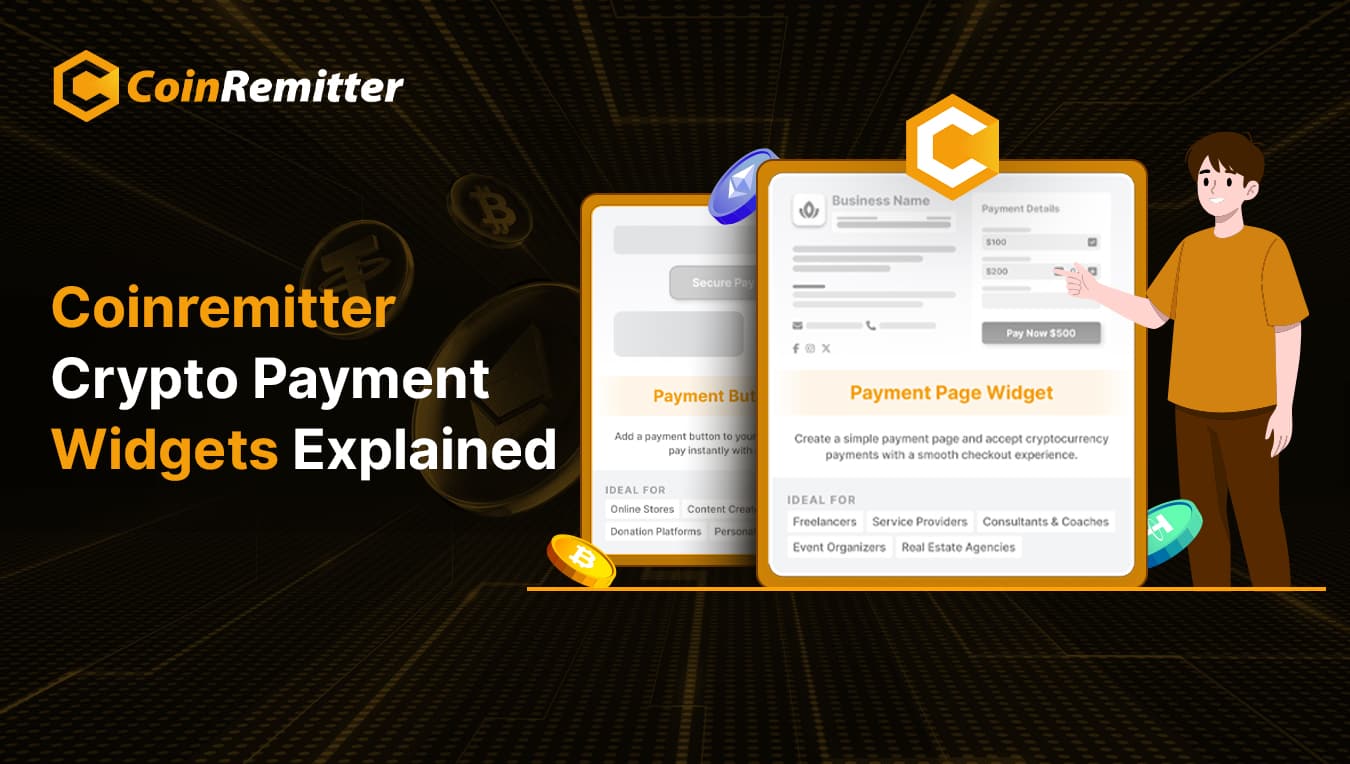
Running on neither? No-code widgets cover it: a payment button, a shareable payment page, a pricing table. One embed code, zero lines of custom logic.
One step worth taking either way: test before going live. Create a Test Coin wallet and 10 TCN land in it automatically, so you can run the entire payment flow. Webhooks included without risking real funds. The Test Coin guide walks through it.
Why Businesses Are Adopting Crypto Payment APIs
The market data backs this up. The Business Research Company has the data. It puts the crypto payment gateway market at $2.39 billion in 2026. It may reach $4.74 billion by 2030.
Merchant behavior matches the forecast. 84% of merchants surveyed by PayPal and the NCA expect crypto payments to become common within five years, and 90% say they’d try it if setup felt as simple as accepting a credit card. Among merchants already accepting, crypto makes up 26% of total sales, and 72% report those sales grew over the past year.
Then there’s the fee math. Credit cards charge 2.9% plus $0.30. A $1,000 sale costs you $29.30. The same sale through Coinremitter costs $2.30 at 0.23%. It settles in 30 minutes instead of 3 to 5 days.
Why Choose Coinremitter for a Crypto Payment API?
No KYC. 3-minute sign-up. Register with an email and start building. No documents, no approval queue.
0.23% per transaction on both plans. That’s one of the lowest rates you’ll find. No setup cost and no monthly minimum.
11 cryptocurrencies across Free and Pro. Bitcoin, Litecoin, Dogecoin, and more on Free. USDT, ETH, and TRX added on Pro. See the full list of supported coins.
12-minute average integration. Plugin, API, or widget. Whichever route you pick. Sign-up to first payment takes about as long as a coffee run.
99.9% uptime, zero breaches in 8 years. Payments don’t wait, and your customers don’t see a maintenance page.
Put the API to Work
A crypto payment API turns accepting digital currency from an engineering project into a configuration task. Address generation, blockchain monitoring, confirmations, notifications. All handled by the gateway, all reachable through a handful of documented endpoints.
The merchants capturing that 26% of crypto sales didn’t wait for perfect timing. They wired it up.
Create your free Coinremitter account, no KYC. Read the API docs and test the whole flow with free Test Coins before your first real payment.
Recent News

Over 38,000 merchants are using CoinRemitter
Join them now